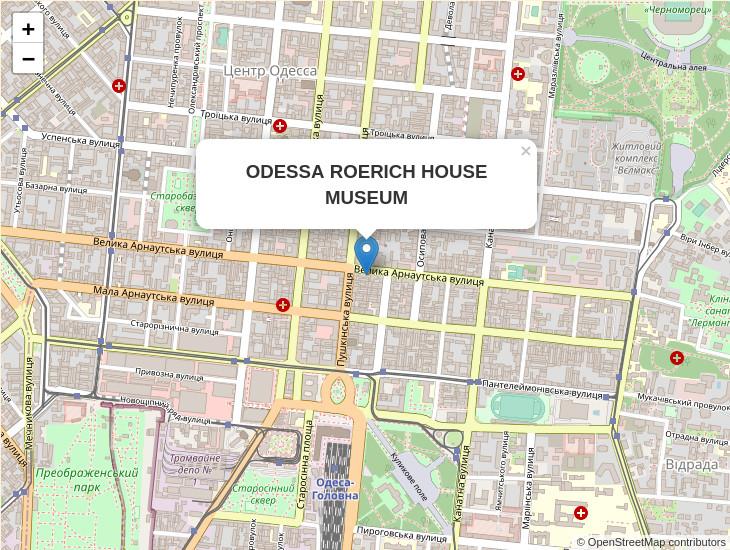
Visit us
Tuesday - Sunday:
10:00 a.m. - 6:00 p.m.
Closed: Monday

From author
From author This publication is a transcript of popular lectures, united under the name “Indian Miracle,” delivered by the author in Leningrad in 1986–87 for a broad audience, and dedicated to the Indian-Soviet Cultural Festival held in 1987. The lecture series aims to familiarize a broad audience with the rich and peculiar culture of ancient India and aims at people starting their acquaintance with a rather specific material. The author’s main task was to compensate for the inaccessibility (for that time) of literature on this issue. The second task — to fulfill the interest of the Russian reader in the history of the culture of a friendly country. Without an acquaintance with the main characteristic features of Indian culture in antiquity and the Middle Ages, it isn’t easy to understand many of the phenomena of modern India, given the specifics of many Indian traditions. The author strove to give an objective characterization of many cultural aspects, without paying too much attention to “Indian exotics.” Lectures are based on domestic and foreign popular and scientific publications, many of which have long been a bibliographic rarity. Quotes from the works of Indian and Western thinkers about India, as well as excerpts from ancient Indian literary and philosophical works, are widely used. The author sought to show not only the greatness of Indian culture as an integral part of universal human culture but also its influence on the culture of other countries of Asia and Europe, for example, the impact on poets of Russia and Western Europe. Lectures were accompanied by the demonstration of a large number of slides (about seven hundred) made from monuments of Indian art and architecture, as well as ethnographic material — rites, festivals, rituals. Lectures were delivered at that time by two performers — P. N. Burundukov (poetic part) and the lecturer, who expresses sincere gratitude to his colleague. In 2001, at the invitation of the Odessa Roerich House Museum, the author gave these lectures with slides and with musical accompaniment, together with N. A. Frolova.
by the director of the Odessa Roerich House Petrenko Elena Grigoryevna
Richard Rudzitis, a Latvian poet, writer, translator, and a chairman of the Latvian Roerich Society in Riga designated Nicholas Roerich as “a Driver of Culture,” and so entitled his book about Nicholas Roerich. So for Nicholas Roerich, the notion of “a Driver of Culture” was fixed. With all sincerity, one can say about Boris Pavlovich Kovalenko that He is a devoted Knight of Culture. Helena Roerich, in one of her letters, had written: “We appreciate, my dears, truly appreciate your love and selfless work in the name of Culture, this poor Sandriliona of the rich sister of civilization. Where is the prince who will pick up her shoe! He will truly be crowned with the World Crown.” Looking back at the whole life path of Boris Kovalenko, we can say that he “raised the shoe” and devoted his entire life to selfless work in the name of Culture.
By birth and in his spirit, Boris Kovalenko carried through his whole life his inner system, his rhythm, and intelligence, which are characteristic for the people born in the city on the Neva river — Leningrad, St. Petersburg. There are very few such people, the indigenous inhabitants whose ancestors took root in the city of Russian glory — Petersburg. Boris Pavlovich belonged to this particular cohort of people.
Boris Kovalenko belongs to the Russian intelligentsia, and his father was a metallurgical engineer. The year of his birth was significant — 1945 — The Year of Victory in WWII. Interestingly, the above-given letter of H. I. Roerich was written on May 9, 1945, i.e., the Day and Year of Victory. Perhaps this fact also determined the whole direction of the life of Boris Pavlovich Kovalenko. In 1969, he graduated with honors from the Leningrad Shipbuilding Institute. In 1978, after completing post-graduate school and defending a dissertation, he was awarded the title of candidate of technical sciences. He became an accomplished professional in the field of hydro- and aerodynamics. After defending his dissertation, he taught at the Admiral S. O. Makarov State Marine Academy. His love for teaching, for the transfer of professional knowledge, went beyond the framework of narrow professionalism, and joined the endless stream of Culture. His curiosity, passion for travel, a desire to know cultures of the world led Boris Pavlovich through many countries. He was especially attracted by Indian culture. Boris Pavlovich became the Laureate of the competition on Indian culture held by the Embassy of India in Moscow (in the USSR) and won a trip to India. From the trip, he brought many wonderful impressions, as well as books, Buddhist thangkas, and small sculptures. He also had deepened his knowledge about India. The most important result of his study and love for India is his book “Indian Miracle,” — which the reader holds in his hands — published by Odessa Roerich House Museum.
Versatile interests led Boris Pavlovich to various cultural and scientific societies. He was a member of the Petrovsky Academy of Sciences and Arts (education section) and Russian Maritime Register of Shipping (seaworthiness section). He was also a full member of the Russian Geographical Society in St. Petersburg since 1981. Since 1992, Boris Kovalenko was a Chairman of the Commission on the History of Civilization and Noosphere of the Russian Geographical Society.
Inna Vasilievna Shevaleva is a well-known ascetic and activist of the Roerich movement. She was born in Odessa, worked as an ophthalmologist at the V. P. Filatov Clinic, and later moved to Leningrad and transferred all her lecture materials, as well as slides and photographs to Boris Kovalenko. Then, Inna Shevaleva gradually handed over to Boris Pavlovich her programs and her lecturer skills. The transferred materials were mainly dedicated to the creative heritage of Nicholas Roerich and his entire family. Later, Nadezhda Aleksandrovna Frolova — an enthusiast — joined Boris Pavlovich Kovalenko as a co-presenter. So the life-long work of Inna Shevaleva was continued and further developed, resulted in new literary and musical slide programs on the history of World Culture. For their programs, Boris Pavlovich and Nadezhda Aleksandrovna, have issued printed annotations, newsletters, advertisements, booklets. There were about forty of them. Their cultural and educational activities went beyond Leningrad, spread throughout the cities of Russia, and then throughout the CIS countries. Boris Pavlovich and Nadezhda Alexandrovna many times visited Odessa at the invitation of the Odessa Roerich House Museum. Many lectures were given at the Odessa House of Scientists, at higher educational institutions of Odessa, as well as at Odessa Roerich House Museum. Boris Pavlovich always kept a record of the lectures given and noted the number of people who attended them. Those numbers are overwhelming: more than 1000 lectures were delivered, which were attended by more than 180 thousand people.
In Odessa, Boris Pavlovich and Nadezhda Aleksandrova presented literary and musical slide programs:
and others. Boris Pavlovich directed many popular science films dedicated to the figures of Russian and world culture, and the patriotic education of the youth of Russia. Many of them were filmed during travels, for example, “Rus’ Yaroslavskaya” (The Yaroslavl Russia), “The Road to the Temple,” and others. We have discussed and planned a film about the Odessa Roerich House Museum.
It is necessary to mention the rare human qualities of Boris Pavlovich Kovalenko. He was a selfless Knight of Culture, the Knight of friendship, the Knight of all the glorious deeds He undertook, the Knight of devotion to Woman. He was unstoppable, neither hardships of roads nor the overwhelming loads He carried were able to stop him. He never allowed the Woman to help him. He was humble in everyday life in clothing and food, surprisingly agile, smiling, courteous, friendly, and sensitive to one’s needs. He had a military bearing, a slender back, and easy gait, which have always been characteristic for people of the past 19th century. Boris Pavlovich Kovalenko is a long-time friend of the Odessa Roerich House Museum. Since the foundation and formation of the Museum’s exposition, he had repeatedly replenished its collection. Boris Pavlovich donated the Buddhist thangkas, a small Buddhist sculptures, copies of N. K. Roerich’s paintings, lifetime editions of letters by H. I. Roerich, and rare books of N. K. Roerich, as well as the archive of Inna Vasilievna Shevaleva. Boris Pavlovich was also one of the founders of the N. K. Roerich Museum-Estate in Izvara.
In the summer of 2006, Boris Pavlovich sent his completed manuscript “The Indian Miracle” to Odessa, with a proposal to publish his long-term work. We also planned the publication of another of his works — “Encyclopedic Handbook of Iconography of Buddhist Art.”
The selfless work of Boris Kovalenko in the field of Culture was appreciated by the Museum-Institute of the Roerich family in St. Petersburg. He became the Laureate of the International Nicholas Roerich Prize in the nomination “For the Preservation of the Roerich Heritage.” The published book “The Indian Miracle” is a tribute to a selfless friend — Boris Pavlovich Kovalenko.
N. K. Roerich wrote: “Each sprout of primordial friendship must be kept in the name of future cooperation. Keep, protect, grow.”
Visit us
Tuesday - Sunday:
10:00 a.m. - 6:00 p.m.
Closed: Monday